
Duct Sealing Cost in Greeneville, TN: What You’ll Pay and Why It Matters More Here
Duct sealing in Greeneville typically runs between $650 and $2,400 depending on the method and scope, with most homeowners in the $900–$1,500 range for a complete seal on an average-sized system. Call (888) 727-1051 for a free, exact quote after we inspect your ductwork — estimates take about 20 minutes and come with no pressure.
Twenty years crawling through Greene County crawlspaces has taught us something the ridge-top markets don’t face: in Greeneville’s valley-bottom neighborhoods, a leaky duct isn’t just bleeding conditioned air into your attic or crawlspace. It’s functioning as a moisture-ingestion pump, pulling near-saturated outside air directly into your living space every time the system cycles. That changes the math on what sealing costs — and what it’s worth.
Why Greeneville’s Geography Makes Duct Sealing Different
Greeneville sits in a low valley basin ringed by Appalachian ridges where cold-air pooling and the Nolichucky River watershed produce near-daily fog and among the highest sustained ambient humidity levels in northeast Tennessee. The valley-bowl geography creates frequent temperature inversions and morning fog that lingers into midday for much of fall and winter. Crawl-space and basement duct runs in this environment are exposed to sustained near-saturation air for extended stretches each year, sharply accelerating interior rust, insulation breakdown, and mold colonization compared to homes on higher terrain nearby.
Here’s what that means in practical terms: when your return duct has a gap at a joint or a compromised connection at the plenum, negative pressure doesn’t just pull in dusty crawlspace air. It pulls in air that routinely approaches 90–100% relative humidity during fog events. That moisture seeds mold growth inside your ductwork, degrades fiberglass insulation, and forces your HVAC system to work harder to dehumidify what it just re-introduced. In drier ridge-top communities like Johnson City or Kingsport just miles away, sealing is primarily an energy-efficiency play. In Greeneville’s bottomland neighborhoods, it’s also moisture control — and that compounds the return on your investment.
Thomas Hernandez, Owner and Lead Technician at Guardian Air Duct Cleaning Greeneville, grew up near the Nolichucky River corridor on the south end of town and has spent his whole adult life working in and around Greene County homes. He’s crawled through just about every duct configuration old and new construction in this county has to offer. When he inspects a system, he’s not running through a checklist — he’s recognizing patterns from two decades of seeing what this specific climate does to ductwork.
Two Cost Tiers: Which One Applies to Your Home?
Not all duct sealing is the same, and the price difference between methods is substantial. We break it into two categories based on what we find during inspection.
| Sealing Method | Typical Cost Range | Best For |
|---|---|---|
| Mastic sealant application at joints, connections, and plenum | $650 – $1,200 | Moderate leakage at accessible joints; homes with localized problem areas |
| Pressurized aerosol sealing (Aeroseal-style) | $1,500 – $2,400 | Extensive distributed leakage; older systems with multiple failure points; inaccessible duct runs |
| Combined duct cleaning + sealing (single mobilization) | $900 – $1,800 | Most Greeneville homeowners — addresses root cause and protects long-term |
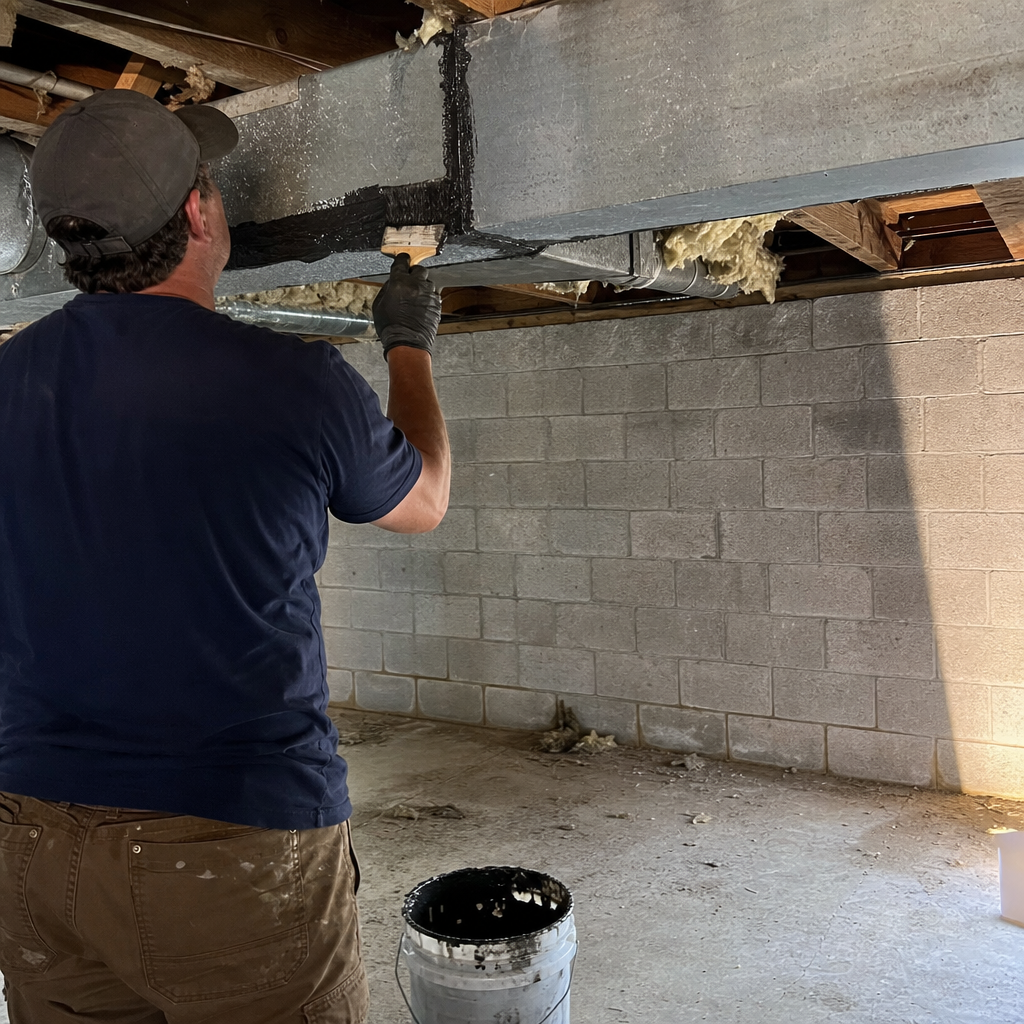
Mastic sealing is our starting point for most systems. We apply a thick, fiber-reinforced sealant to every joint, connection, and penetration point we can access — plenum connections, trunk line splits, takeoff boots, and return air platforms. The material remains flexible for decades, unlike the foil tape originally used on many Greeneville homes. For a typical 1,500–2,000 square foot home with accessible ductwork and moderate leakage, this lands in the $800–$1,100 range.
Pressurized aerosol sealing becomes the right tool when leakage is widespread throughout the system — common in homes with original ductwork from the 1950s–1970s manufacturing boom. Much of Greeneville’s residential stock was built during that era when Magnavox, Uniroyal, and related suppliers drew a large working-class population, leaving a significant number of homes with original galvanized-steel trunk lines and early fiberglass duct board that corrode and delaminate faster than expected under the valley’s persistent humidity. The tape used on those original joints has long since dried and cracked. When we pressurize the system and find leakage at 15, 20, or 30+ points, chasing each one with mastic isn’t cost-effective. The aerosol method seals from the inside, finding and filling gaps we couldn’t reach otherwise.
Thomas makes the call on which method applies — and he’s direct about it. “If I wouldn’t tell my own family they need it, I’m not going to tell you.” That means if mastic will solve your problem, that’s what he’ll recommend. If your system needs the full pressurized treatment, he’ll show you the leakage test results and explain why.
What Drives Cost Higher or Lower in Greeneville?
Several factors specific to our market affect where you’ll land in those ranges:
- Accessibility of duct runs. Homes with ducts buried in sealed crawlspaces or behind finished basement ceilings take more time to access and seal properly. Greeneville’s older homes — especially the pre-WWII stock downtown with oversized gravity-furnace duct cavities — often present surprises.
- Extent of existing damage. Corroded galvanized trunk lines or delaminated duct board require repair before sealing is effective. We address this during our Duct Repair & Sealing service.
- Seasonal contamination load. Homes on lower-elevation streets near the Nolichucky River bottomlands and along the surrounding Greene County agricultural fringe tend to accumulate field dust — tobacco, hay, and row-crop particulate — blown in through return-air leaks during late-summer and fall harvests. If your ducts are packed with this material, cleaning before sealing is essential or you’re sealing debris into the system.
- Combination with other services. Duct sealing combined with cleaning in a single mobilization is meaningfully cheaper than two separate service calls. Sealing before installing an air quality product — an Aprilaire humidistat, Honeywell filtration upgrade — protects the investment in that equipment.
We use professional-grade equipment from Rotobrush and Nikro for cleaning, and we specify Honeywell and Aprilaire products when air quality upgrades make sense. The same tools commercial and industrial contractors use, deployed in your residential system. That’s the Guardian approach: professional-grade equipment, residential prices.
How We Diagnose What You Actually Need
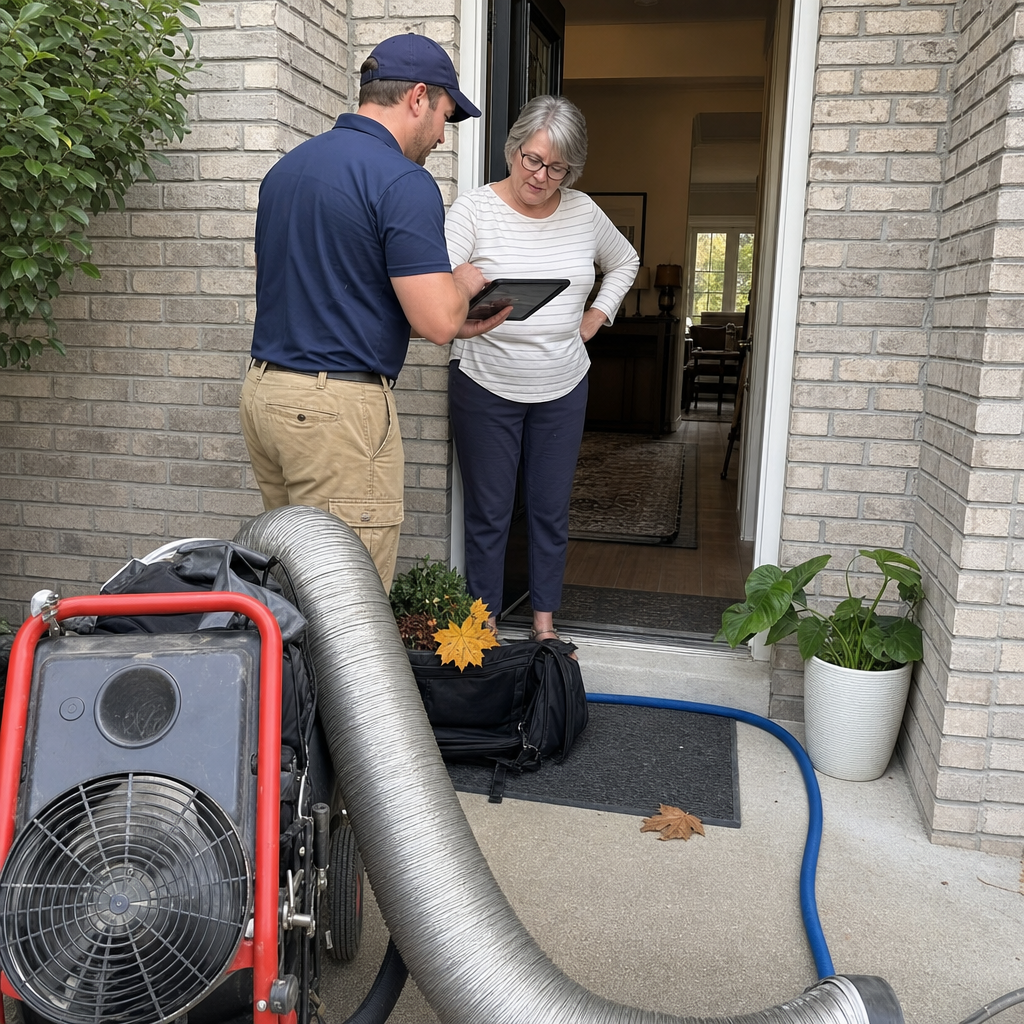
Every sealing quote starts with a hands-on inspection — Thomas handles your job personally, not a rotating subcontractor. We pressurize the system and measure leakage against the conditioned space volume. We photograph compromised joints and corrosion points. We check for the specific failure patterns this climate produces: rust at galvanized seams, fiberglass delamination from moisture cycling, tape degradation from temperature swings.
Clean ducts are only part of the answer. If we find significant leakage during a cleaning service — which happens frequently on 20- to 50-year-old systems in this county — we’ll show you exactly where and explain the cost to seal it then and there. Two decades of duct work means we find what others leave behind.
Our 113 verified customer reviews at a 4.7 rating reflect this specificity. Homeowners mention Thomas by name, describe the inspection process, and note that the quote matched the final bill. That’s not accidental — it’s how we’ve operated for 20 years in Greeneville.
What Does Duct Sealing Actually Save You?
The Department of Energy estimates typical homes lose 20–30% of conditioned air through duct leakage. In Greeneville’s climate, the savings calculation has three parts most markets don’t:
Energy savings: Sealed ducts deliver heated or cooled air where it’s supposed to go. Your HVAC system runs less, and run-time reduction is the biggest factor in utility bills.
Moisture load reduction: Every cubic foot of humid crawlspace air you stop pulling into the return is a cubic foot your system doesn’t have to dehumidify. In a valley where fog is routine, that adds up fast.
Equipment protection: Moisture inside ductwork corrodes heat exchangers, degrades blower motors, and shortens system lifespan. Sealing is preventive maintenance with a measurable return.
We don’t promise specific dollar savings — every home’s starting point is different — but we do guarantee you’ll see the leakage reduction in our before-and-after pressure test. Most Greeneville homeowners who seal and clean together report noticeably more even temperatures room-to-room and less system cycling during humid stretches.
FAQs
Most homeowners pay between $900 and $1,500 for complete duct sealing, with simpler mastic jobs starting around $650 and extensive aerosol sealing reaching $2,400. The exact cost depends on your home’s duct configuration, accessibility, and the extent of leakage we find during inspection. Call (888) 727-1051 for a free, exact quote — estimates are free and take about 20 minutes.
Sealing existing ducts is almost always cheaper than replacement, typically 60–75% less than a full ductwork overhaul. Replacement only becomes the better option when trunk lines are extensively corroded, duct board is delaminated throughout, or the original system was poorly designed for the home. Thomas will show you the specific damage and give you honest numbers for both paths if replacement is worth considering.
Yes, and we recommend it — combining services in one mobilization saves $150–$300 compared to separate visits because we’re already set up, the system is already accessed, and we can verify sealing quality with the same pressure test equipment. We find what others leave behind during cleaning, then fix it while we’re there.
Signs include uneven temperatures room-to-room, excessive dust despite regular filter changes, humidity that won’t stabilize, and utility bills higher than comparable homes. But the only reliable way is a pressure test — we measure actual leakage against system volume. Many Greeneville homeowners are surprised by how much conditioned air they’re losing, especially in 1950s–1970s homes with original tape-sealed joints that have dried and cracked.
Ready for an Exact Quote?
Guardian Air Duct Cleaning Greeneville has served this valley for 20 years with owner-operated, hands-on service. Thomas Hernandez brings two decades of duct work directly to your home — no subcontractors, no checklist inspections, no pressure. Call (888) 727-1051 today for your free estimate and find out exactly what sealing your system will cost.
Written by Thomas Hernandez, Owner & Lead Technician at Guardian Air Duct Cleaning Greeneville, serving Greeneville, TN.